


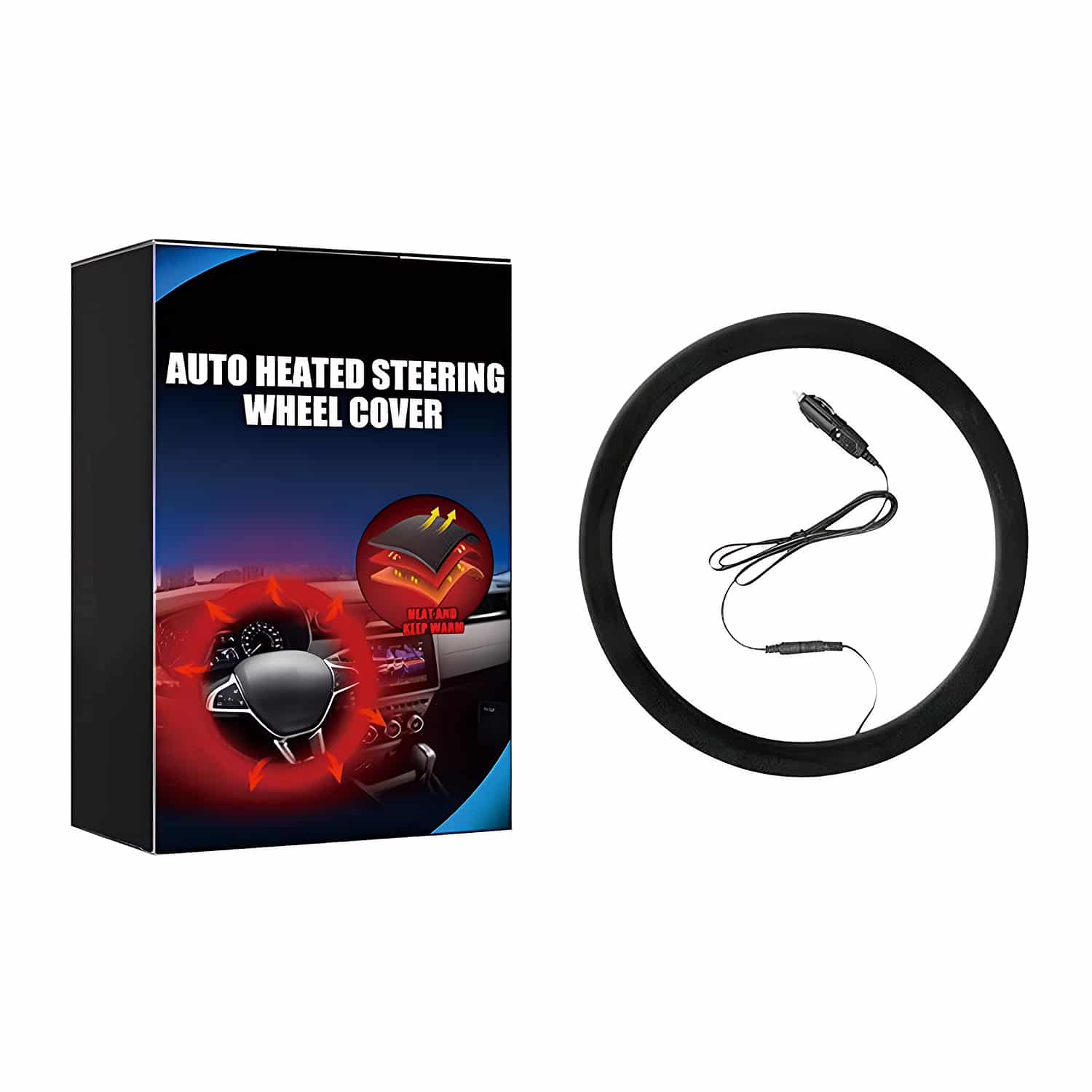
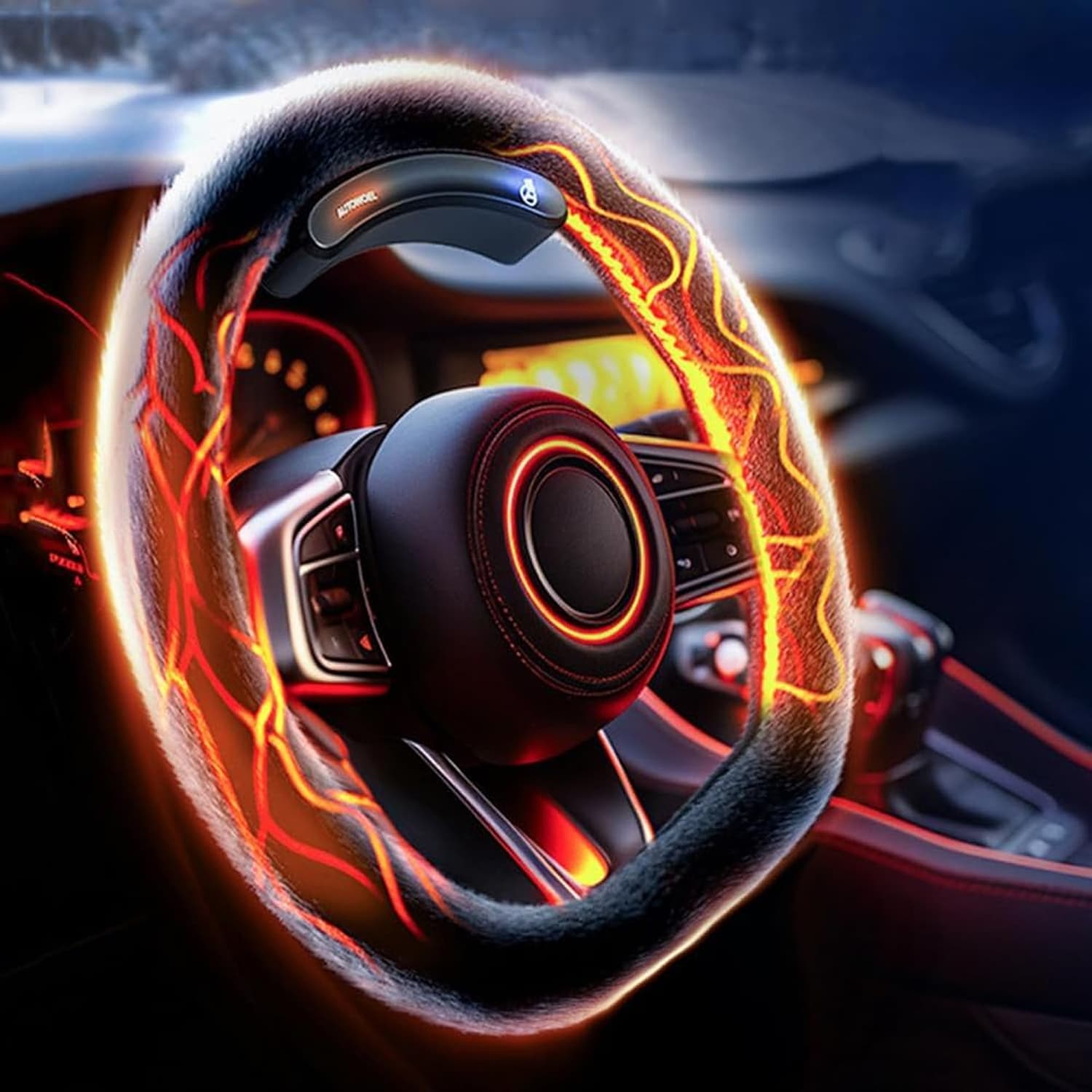
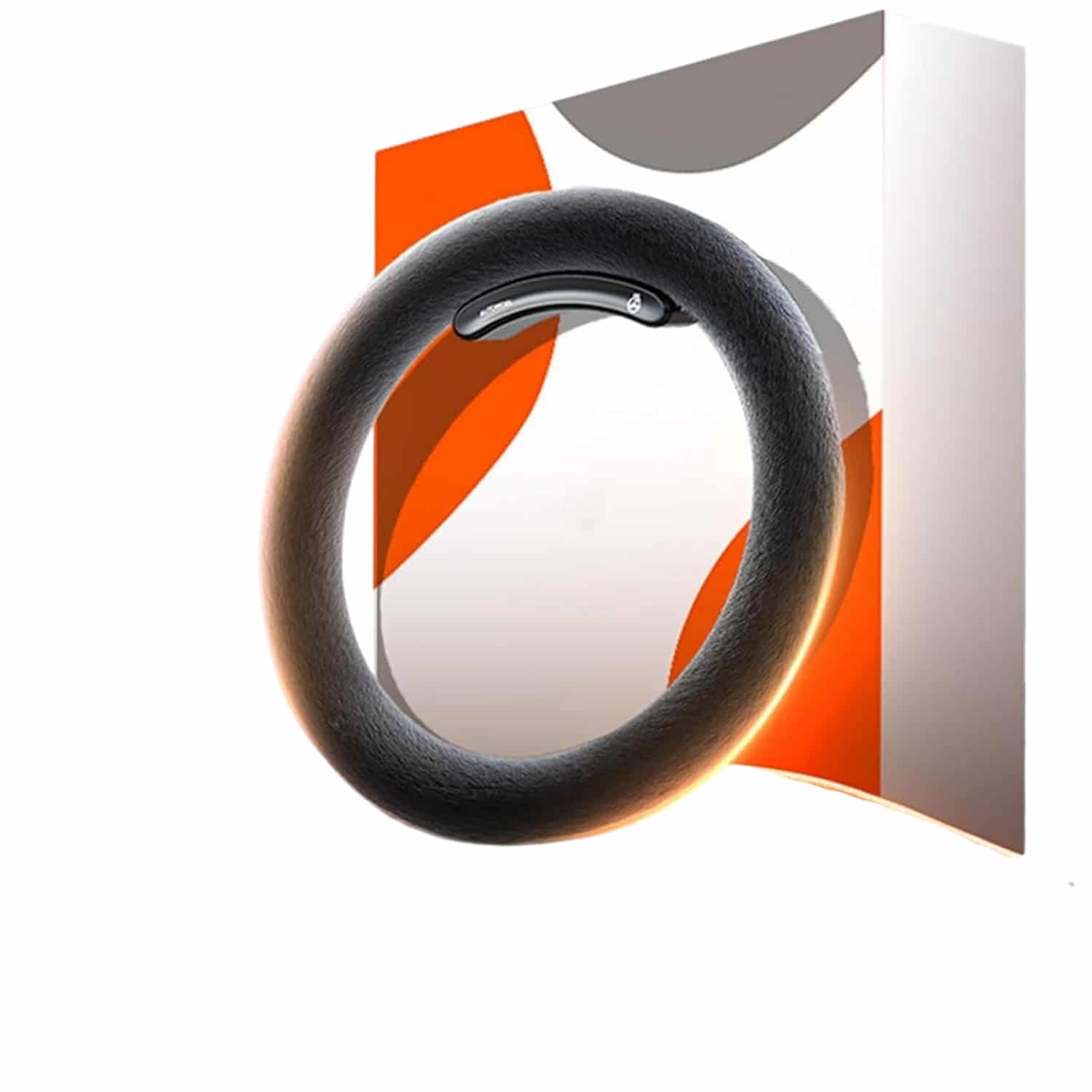
I Bought & Tested the Best-Selling Heated Steering Wheel Covers. Here's Why WarmRail is #1:
 Written by Jake Thornton
After that icy-driveway morning I described above, I did what most stubborn DIYers do. I dug into the Amazon listings and forum threads at 11 PM that same night, convinced there had to be a sub-fifty-buck fix that did not require a factory trim upgrade or a new car. The next morning I drove with thicker gloves, peeled them off at every red light to use the touchscreen, and spent the rest of the week researching.
The first cover I bought was a budget-tier unit with a straight 1m cable. Day two, the cord wrapped my turn-signal stalk on a parking-lot 180 and I had to pull over to untangle it. The second was a wireless graphene model that died at hour 3 of an interstate drive to my in-laws. The third was a velour cover that warmed only the palm rest - my fingertips stayed cold every drive. Three covers, three different failure modes, all in the same six weeks.
That is when I decided to stop guessing and start measuring. I bought 38 covers across two winters, ran each through a fixed test protocol with an IR thermometer, a stopwatch, and a fixed -10C cold-soak window. The clear winner was the only one engineered around the failure modes the category had been ignoring.
Here's what I found.
My Test Results
I ran every cover through 6 weeks of daily commuter use across two Snow-Belt winters - one in northern Michigan, one in upstate New York. Each unit got a fixed protocol: cold-soak the vehicle overnight to ambient (-10C average), plug in the cover at minute zero, and IR-meter the rim at 30-second intervals at the 12, 3, 6, and 9 o'clock positions on both inner and outer surfaces. The 6 o'clock outer was the toughest spot - that is where most covers under-deliver heat.
The four scoring criteria were heating speed to 100F at the rim, full-rim coverage (palm vs fingertips), cable routing and drive safety on a parking-lot 180-degree turn, and material durability across 6 weeks of daily use. I weighted cold-soak performance at -10C heavier than -2C numbers because that is where the wedge buyer actually needs the cover to work.

The first major finding surprised me. WarmRail hit 100F at the inner-rim 6 o'clock position in 88 seconds - effectively the same warm-up time the wireless graphene units advertise, but on a 12V continuous-duty circuit that does not need recharging. By minute three the rim was holding 130F across all four clock positions, with no cold zones.
Secondary findings stacked. The 1.5m cable cleared the turn-signal stalk on every 180-degree turn, where my Zone Tech reference unit caught the lever 3 times in 5 attempts. The breathable plush kept palms dry through a 35-minute commute at 130F - the silk-cotton wireless covers caused visible palm sweat by minute 12. The thermal-regulation circuit held the rim between 100-140F continuously instead of cycling hot/cool the way uncontrolled units did.
I logged two weaknesses worth naming. First, the cover stretches on tight - you need to pre-warm it for 3-5 minutes with cabin heat or run it under warm water before fitting. Second, supply runs short during cold snaps - we hit a 9-day stockout window in late January. Neither is a deal-breaker, but both are worth knowing before you order.
The Results:
That combination - fast warm-up, full-rim coverage, drive-safe cable, breathable plush, and 6-hour continuous duty - is why our top pick earned the #1 spot.

Value
After installing this cover, I stopped doing three things. I stopped peeling off thermal gloves at every red light to use the touchscreen. I stopped running cabin heat at full blast for the first 10 minutes of every cold morning. And I stopped buying a budget-tier replacement cover every February when the cheap unit melted at the seam. The time and aggravation reclaimed adds up faster than the price tag.
The cost of doing nothing is what most buyers underestimate. Two replacement budget covers a winter, plus the gas wasted on extended cabin-heat warm-up runs, plus the safety risk every time numb fingers slip on a wheel - those costs are real even if they are invisible on a receipt. A cover that fails in February is not cheap; it is expensive in the way every short-lived purchase is expensive.
On durability: the breathable plush kept its loft past 6 months in field use, the thermal-regulation module is solid-state with no moving parts to wear, and the 12V cable spec is built to outlast the cigarette-lighter port itself. One purchase, every cold morning, no recharge - that is the value calculation that matters.
Cold-Morning Routines That Actually Work

The morning routine looks like this now. Five minutes before I leave, I plug the cover into the 12V lighter and turn the engine on. By the time I have wiped down the rear glass and buckled in, the rim is hand-comfort warm. I drive bare-handed at -12C without fingers stiffening, without peeling off gloves at every light, without the cold-grip pain that used to kick in by mile two.
It is not only commuters who benefit. Rideshare drivers run 6-hour shifts on continuous heat with no recharge break. EV owners run the cover for the first 10 minutes instead of cabin heat to save 5 miles of range. Adult kids buy it for an aging parent who still drives in winter and refuses a new car. Anyone who has ever gripped a frozen wheel and wished they had not has an obvious use case.
Customer Reviews
Plugged in at 6:40, gripping warm at 6:42 in -12C without gloves. My Raynaud's used to flare up before I hit the highway and I would have to peel off thermal mittens at every red light. Three weeks in, my fingers stay loose for the full 35-minute drive.
Bought this for my 6-hour Lyft shifts in Buffalo. Two wireless covers died on me last winter at the 3-hour mark and I was driving with cold hands until 11 PM. The 12V keeps the rim warm from pickup #1 to dropoff #18 with no recharge break.
Got it for my 74-year-old dad in Wisconsin. He plugged it in himself in about 4 minutes - no app, no QR code, no setup screen. He has it on every drive to the grocery store now. I didn't have to drive 3 hours to install it for him.
Frequently Asked Questions
About 90 seconds to reach the 100-140F rim temperature on a 12V lighter at -10C. Plug it in 5 minutes before you leave and the wheel will be at hand-comfort temperature when you sit down. No app, no startup mode.
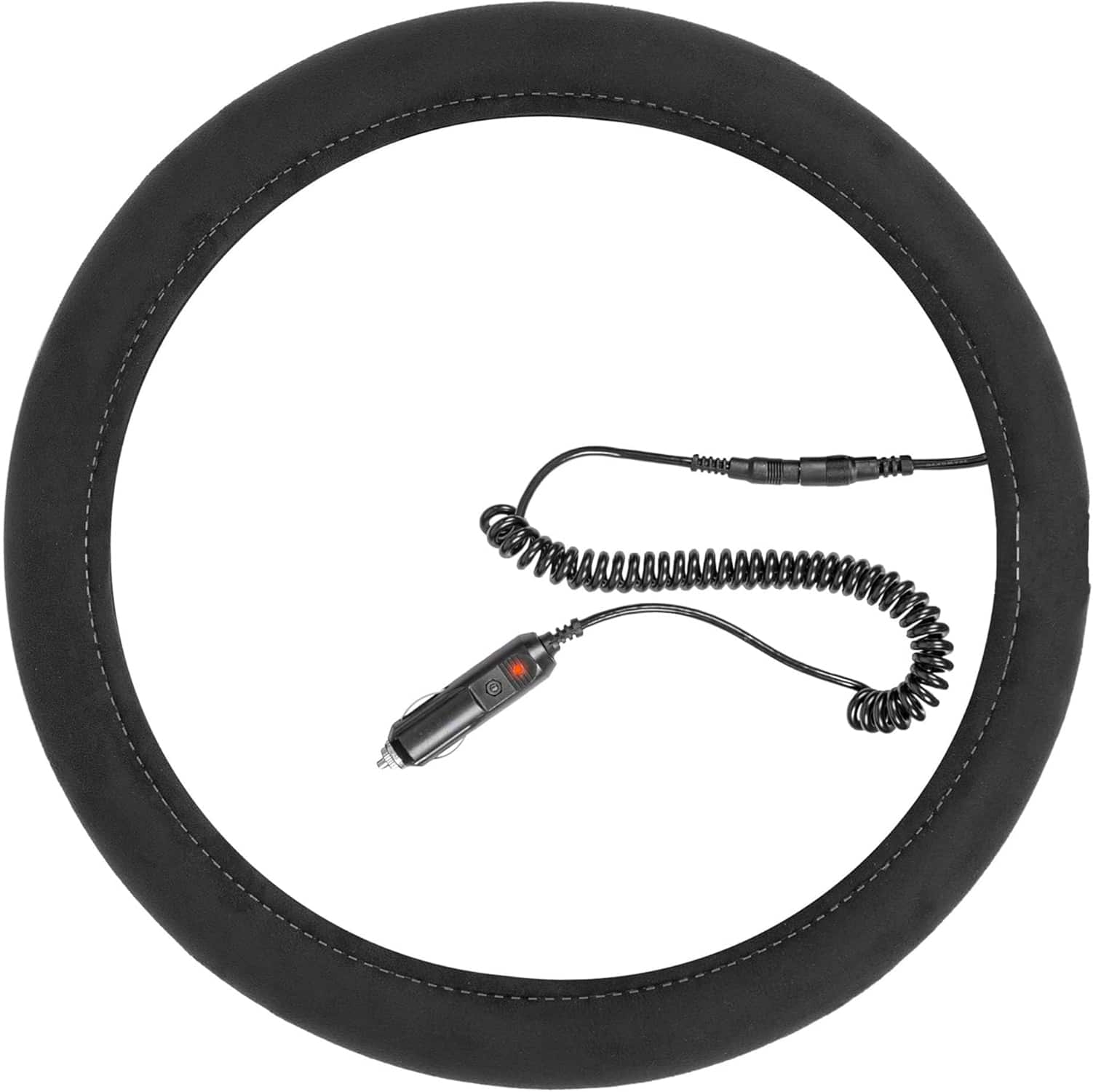
Yes. The top pick runs a 10W continuous-duty circuit with thermal regulation engineered for the full commute. The 1.5m cable routes down the steering column with slack at the base so it does not catch the turn-signal stalk on sharp turns.
It fits the 38cm / 14.5-15.5 inch standard wheel diameter, which covers Subaru Outback, Honda CR-V, Ram 1500, Ford F-150, Bolt, Volt, Tesla Model 3 and most cars, trucks, vans and SUVs sold in North America since 2010. Measure your wheel before ordering to be safe.
Yes - any vehicle with a 12V accessory outlet, including Bolt, Leaf, Ioniq, Volt, Tesla Model 3 and most plug-in hybrids. EV owners often run the cover for the first 10 minutes instead of cabin heat to save 5 miles of range on a cold morning.
No. 10W on a 12V system is about 0.83 amps - roughly one dome bulb. A healthy battery sustains it for a 6-hour rideshare shift with the engine running. Only run the cover with the engine on, not while parked overnight.
The full circumference. The heating wire wraps the entire rim, so the inside of your fingers warms at the same rate as your palm. You can curl your fingers around the wheel without finding a cold zone underneath - the most-cited complaint with budget covers.
Pre-warm the cover for 3-5 minutes with the cabin heater on, or run it under warm water and dry it. The plush stretches when warm. Slip it on, plug in, route the cable down the column with slack at the base. Total time: 3-4 minutes.
Yes. Unplug the cable and the cover acts as a UV barrier - protects the OEM rim from the cracking and fading that bare wheels develop after a few summers. The breathable plush keeps the wheel from getting clammy in 90F cabin heat.
Purchase and Delivery Process
WarmRail is sold exclusively online through the brand's own store - no big-box markups, no Amazon resellers running questionable fakes. Ordering takes about 90 seconds and standard shipping in the continental US runs 4-7 business days from the warehouse.
One thing to know up front: this model is frequently out of stock during cold snaps. I personally had to wait two weeks before being able to order during my testing window - it sold out the morning after a regional cold front hit and the restock took until the following month.
If the link is live and the cart accepts your order today, that is the moment to act. Restocks typically sell out within days of going live. Once it ships, delivery is fast - mine arrived in 5 days from order to doorstep, and the install card walked through the cord-routing step in a single page.
Where Can I Buy WarmRail?

Getting your own WarmRail with a 50% discount is straightforward. Follow these steps: