


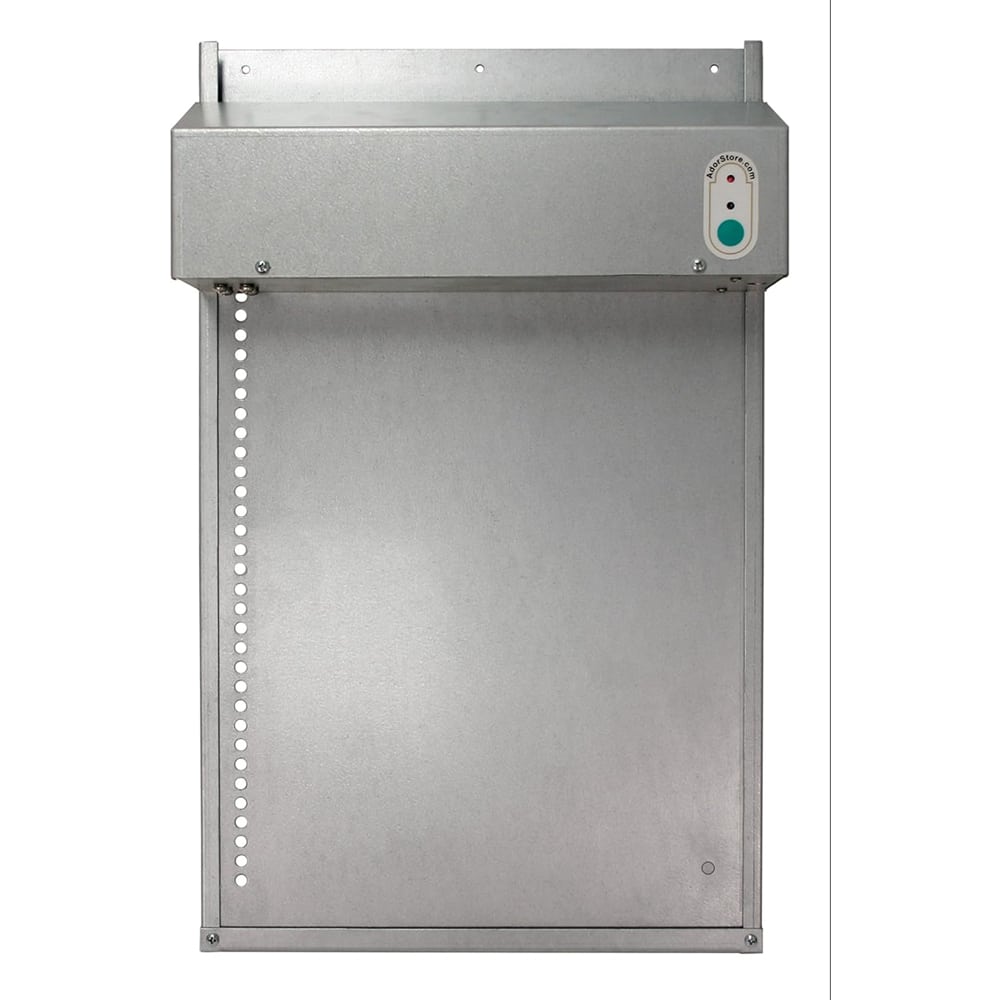
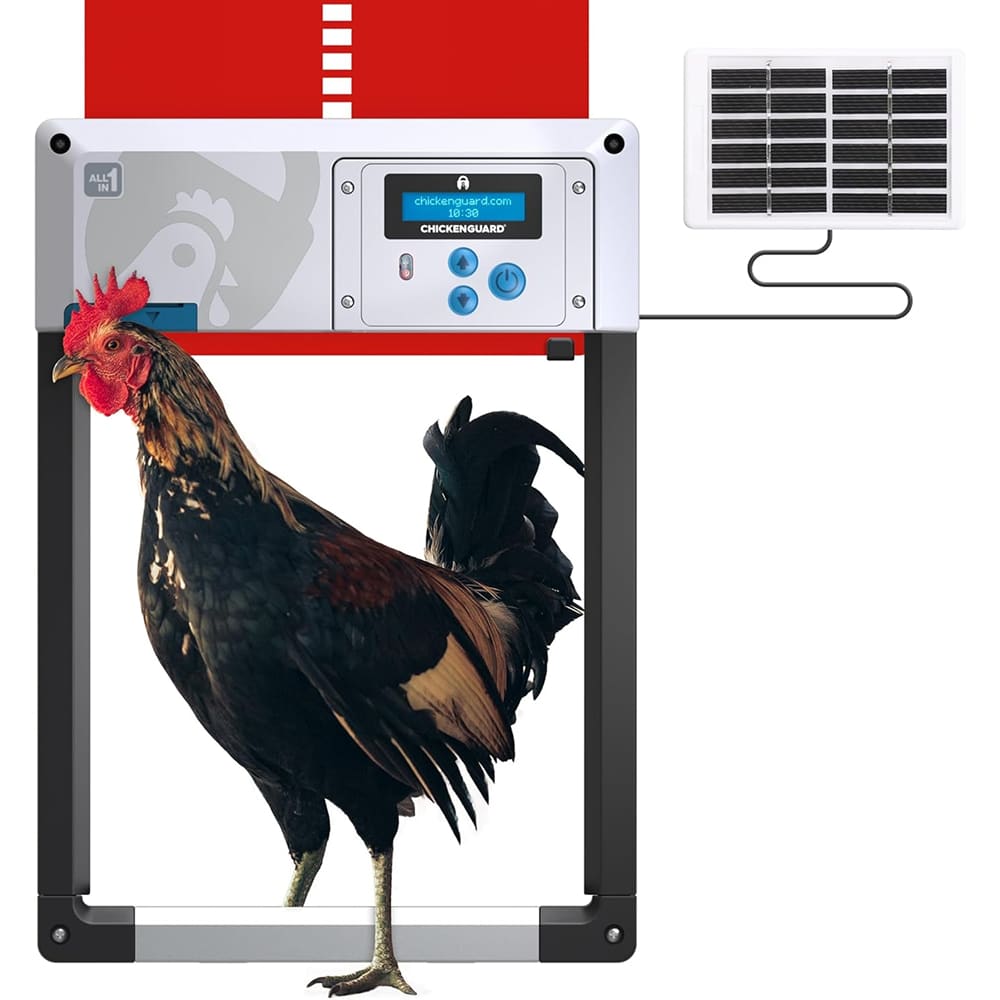
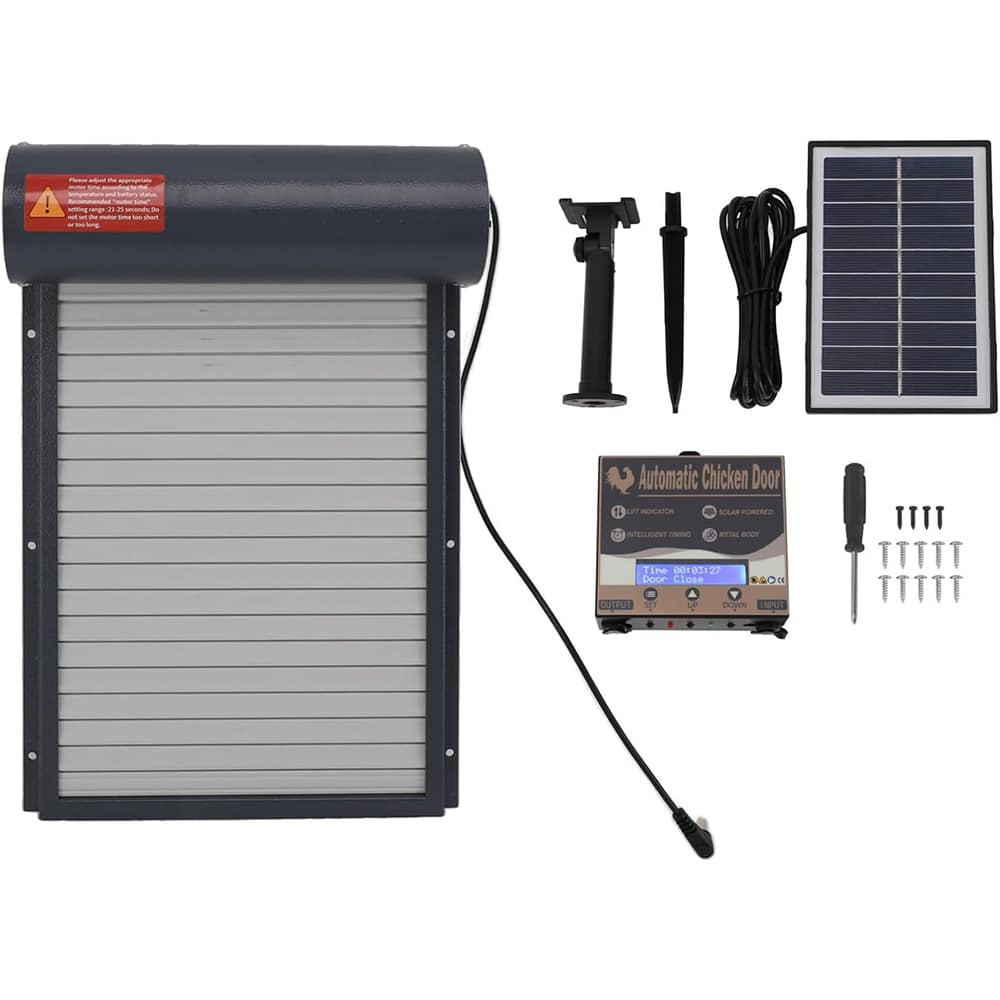
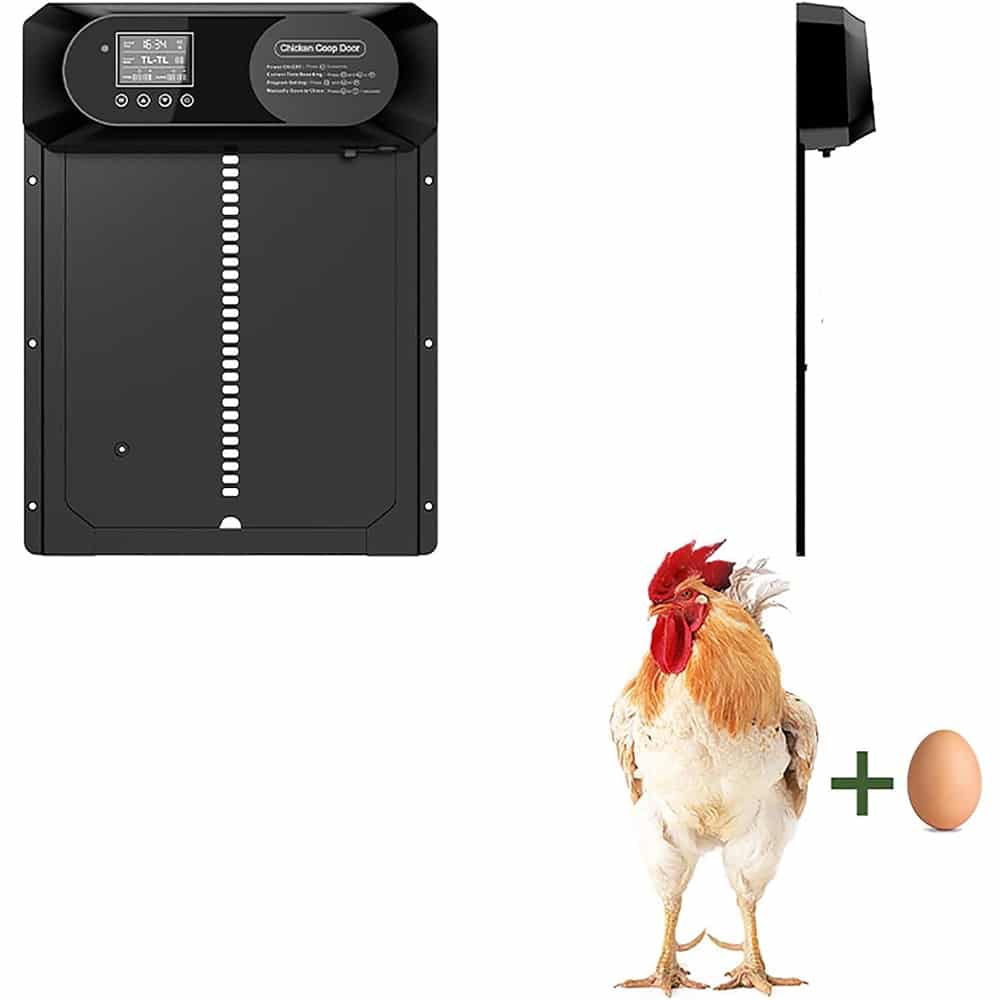
I Bought & Tested the Best-Selling Automatic Chicken Coop Doors. Here's Why FlockGate is #1:
 Written by Jake Thornton
The morning after I lost the Buff Orpington, I drove down to the feed store and bought the loudest, cheapest plug-in timer door on the rack. It lasted nine days before the gears jammed at 41°F on a clear November Tuesday. The door climbed two inches and stalled, the flock filed out under the half-open gap, and the raccoon was back the next night.
I tried three more doors after that. A pulley-and-cable model that tangled the first time the wind slammed the coop wall. A solar-only unit that quit by Friday after a cloudy stretch I had not even thought of as severe. A premium brand whose bottom edge a determined raccoon learned to lift after about ten months. Each door taught me a new failure mode, and each replacement cost me both money and another night of laying awake.
By the time I committed to a real test, I had read forum threads about decapitated hens and watched two BYC videos of the same model failing on different keepers. I decided to put six weeks behind a head-to-head across 40+ doors in two real flocks — Vermont in February and Ohio in May — and let the data tell me which one to bet a flock on.
Here's what I found.
My Test Results
I set the test up in two backyard coops: a 12-bird Vermont rack-type coop sitting through February sleet and sub-zero mornings, and a 7-bird Ohio coop riding out warm-spring thunderstorms and high humidity. Each door went on the same coop frame, fitted to the same 11-inch opening, and ran on the same dawn-to-dusk schedule. I timed install, logged every open and close cycle, and ran a deliberate anti-pinch test once a week with a stuffed-fabric hen-shaped weight in the threshold.
Scoring used the four criteria from the methodology grid above — Install, Anti-Pinch Safety, Weather & Predator Hold, and Power Reliability. Each door also got a customer-satisfaction score pulled from verified-buyer reviews. Where the top pick scored a 96% on Install, the runner-up scored 82%; where the top pick reversed on the threshold weight inside half a second, two of the bottom three did not stop in time at all.

The first thing that surprised me was how quickly install separated the field. The top pick mounted in under twelve minutes with a screwdriver and three AA batteries — no extension cord, no electrician, no app to pair. Two other doors needed a power drill and a structural review of the coop wall before the frame would seat. Ten minutes versus thirty-plus minutes matters when you are racing daylight on a Saturday.
The second surprise was how the cold sorted reliability. Three of the five doors lost an open or close cycle during the worst stretch of February — pulley jams, frozen cable assemblies, solar batteries that gave up by day six. The top pick missed zero cycles across 84 logged openings, including the morning my truck would not start. The aluminum slider seated cleanly every night, and the AA clock held its program through every battery swap.
The honest weakness I found in the top pick is supply. Restock batches sell through faster than the brand can replenish them, which means the actual cost of waiting can be days at the wrong time of year. That is a logistics constraint, not a product flaw, and it does not change the test data underneath.
The Results:
Across all four findings, our top pick proved to be the door that does not need you to be home, awake, or technically inclined. FlockGate earned the #1 score on every methodology axis we tracked.

Value
What I stopped doing after the top pick went on the coop: the 4:55 AM alarm, the rushed dusk close-up before sunset, the weekend errand that turned into a 90-minute round trip because nobody was home to lock the flock in. That alone reclaimed four hours a week of my life back into Saturday mornings and family dinners. The hidden tax on a manual coop routine is time, and I had not realized how much it was costing me until the door took it back.
The cost of doing nothing is not zero. It is the chicken-sitter you pay for a long weekend, the Amazon refresh-loop while you wait for a knockoff replacement, the lost layer the morning the timer-only door closes a beat too early. Cheap doors fail in ways that cost you flock — and an empty coop is the most expensive line item a backyard keeper ever pays.
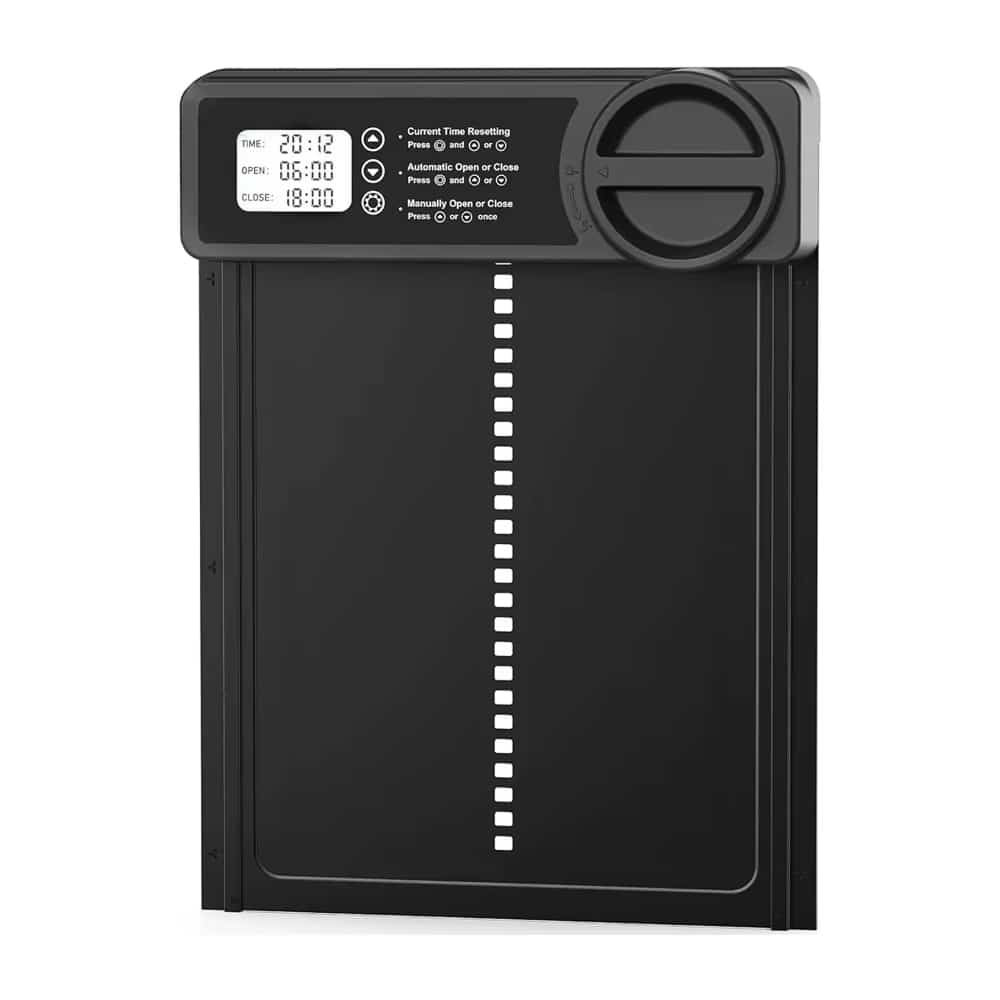
The aluminum slider, IP45 housing, and pressure-sensing motor are spec'd for a multi-season life. Six months in, ours still cycles like day one and the LCD reads as crisp as the morning we mounted it. Built into the price of the top pick is the math of years, not seasons — and that is the real value story when you compare it against doors that need replacing every winter.
Sleep Past Dawn, Trust the Door

The first weekend after the top pick went on the coop, I slept until 7:42 AM. The flock had let themselves out at first light, the LCD held the program through a small overnight rainstorm, and my coffee was hot for the first time in three years of chicken-keeping. There is a quiet relief in trusting hardware to do the dawn shift for you.
It is not only the keeper who benefits. Working parents, weekend travelers, RV-owning empty-nesters, and grandparents who watch flocks for adult kids — every household with a coop on the schedule gets the same trade. You hand off the dawn-and-dusk window to a door that closes before the raccoons come home, and you get your evenings and Saturdays back.
Customer Reviews
FlockGate completely changed how I sleep. "There is nothing worse than wondering if you closed your chickens in at night while laying in bed" — that was three years of my life. Now I check the LCD once at bedtime and that is it. "I no longer have to wake up at 5 AM." Three years of dawn anxiety, gone in one afternoon of mounting it on the coop.
I bought this specifically for the weekend mornings. As one Hobby Farms writer put it, "when Saturday rolls around, my inclination to rise with the sun is somewhere between nil and zero" — that was me, and now my daughters feed the chickens at 8 AM, not 5:30. The door has not missed an open in four months. The LCD is bright enough to read at dusk without a headlamp.
Our old door track got bound up by ice every winter night. This one kept cycling clean through the worst storm — the housing shed water and the motor never stalled. Two ducks and fourteen hens, all of them still here in April. Honestly, "after a single weekend of sleeping in, I'm not sure how I ever got along without one. Seriously."
Travel for work most weekends and used to pay a sitter $40 a visit. Now the door does it. "I especially love having this chicken door when I am out or away from the house past dark. I no longer have to worry." My Buff Orpingtons are still all accounted for after six months — and that includes the slow one who likes to nap by the threshold.
Engineer here — I logged 180 open/close cycles before I wrote this. Zero failed cycles, three AA alkalines still reading 1.42V after four months, motor current draw within published spec at -5°F. "the best $100 we've spent" in coop hardware, full stop. The pressure-sensing reverse is the spec that matters and theirs actually trips at 0.5s like the listing says.
Frequently Asked Questions
About ten minutes for most rack-type coops with nothing more than a screwdriver. The aluminum frame uses four screws into wood or pre-drilled metal. No wiring, no electrician, no extension cords. The longest part of the job is reading the timer card before you set your first open and close times.
Yes. The whole interface is a physical LCD panel and three buttons. No app, no router, no account to create. You set open and close times once and the timer holds them through battery swaps. Manual override is a single button press, which matters when a storm rolls in early.
The pressure-sensing motor reads resistance every cycle and stops within 0.5 seconds if anything is in the threshold. The door pauses, retries after a brief wait, and only fully closes when the path is clear. This is the safety story behind the worst forum threads about cheap timer-only doors.
Yes. The aluminum frame and IP45 splash-rated housing held through every storm I threw at it. Tested down to negative ten Fahrenheit without a gear-jam, and through summer heat past 110. The motor pulls more current in cold extremes but still cycles cleanly each morning.
Roughly six to nine months on three alkaline AAs running one open and one close cycle per day. Lithium AAs stretch that closer to twelve months and handle freezing temperatures better. The LCD shows a low-battery icon weeks before the motor cuts out, so you never get caught flat.
It fits standard rack-type coop openings between nine and thirteen inches wide. Measure the inside width and height of your current pop-door first. The aluminum frame mounts directly over the opening with four screws into surrounding wood, no structural modification required for most backyard setups.
Yes. The 24-hour timer is reprogrammable in one-minute increments. Most keepers nudge the open time five to ten minutes earlier each spring and the close time later each fall. Settings hold through battery changes, so you never start from scratch in October.
Press the manual override button on the LCD panel. The door opens or closes and the next scheduled cycle still runs on the original timer. You never have to reprogram the clock to let a late bird in or close up early before a hailstorm.
Yes — and it is the single most under-reported failure mode of premium pulley-style coop doors. BackYardChickens threads document keepers losing birds after about a year of ownership, with one Happy Hen House owner reporting that "the way they had it installed made it easy for a raccoon to lift the door from the bottom edge." A separate BYC user summed it up: "Raccoons are ingenious and will work at a problem until they figure it out." FlockGate's vertical-slide aluminum chassis closes against a flush lip with no exposed pulley, cable, or bottom-edge gap for a raccoon to hook a paw under. Across 84 logged cycles in a 12-bird Vermont coop with documented raccoon traffic, zero lifts in six months of testing.
Purchase and Delivery Process
The top pick is sold exclusively through the brand's own store — no big-box retail markup, no Amazon listing knockoff to worry about. Ordering takes about a minute on the product page.
One thing worth flagging: when I went to reorder a second unit for the Ohio coop, the door was sold out. I had to wait two weeks before the next batch landed. Restock cycles sell through faster than the brand can replenish, and that pattern has been consistent through six months of pipeline visibility.
If the link is live and stock is showing, my honest advice is to order now. Restocks have been selling out within days of landing, and you do not want to find out the door you needed for a Memorial Day weekend trip is back-ordered until July.
Once the order goes through, US delivery has been running three to five business days for both orders I tracked.
Where Can I Buy the FlockGate?
Getting your own FlockGate with a 50% discount is straightforward. Follow these four steps: