


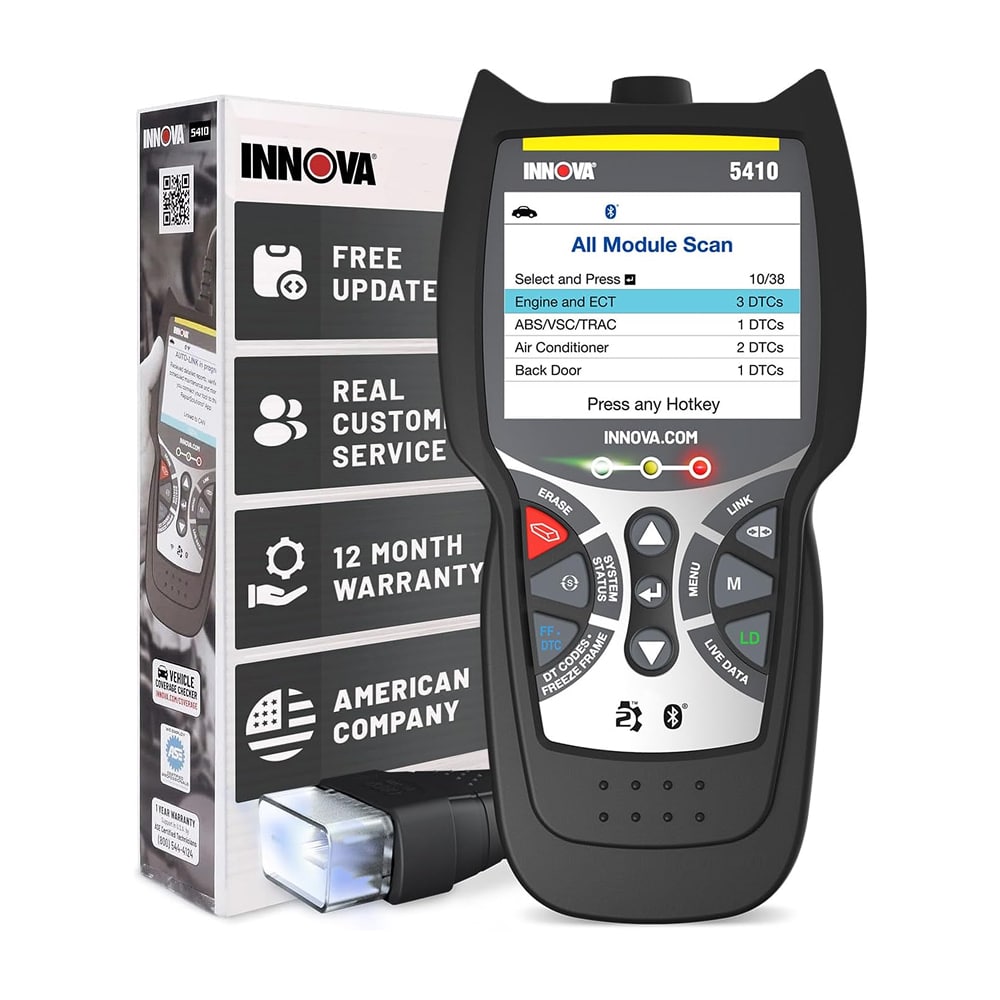
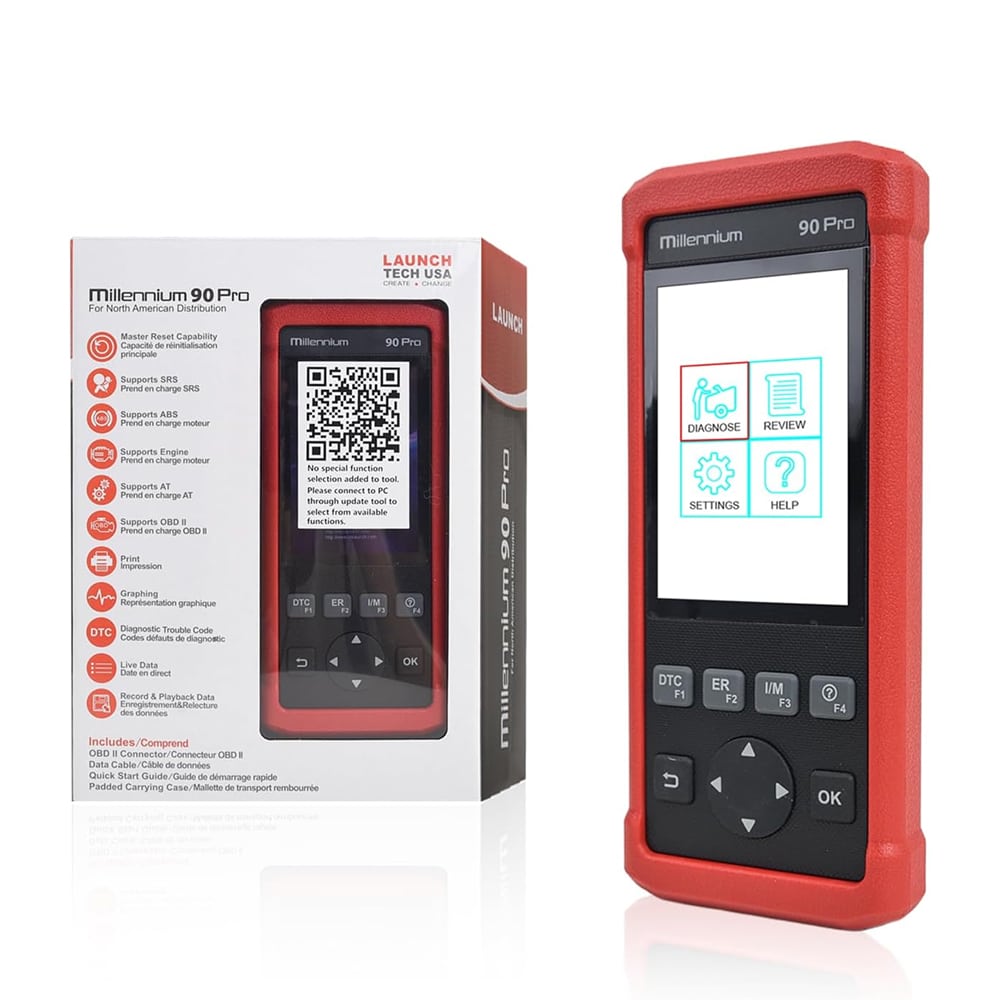
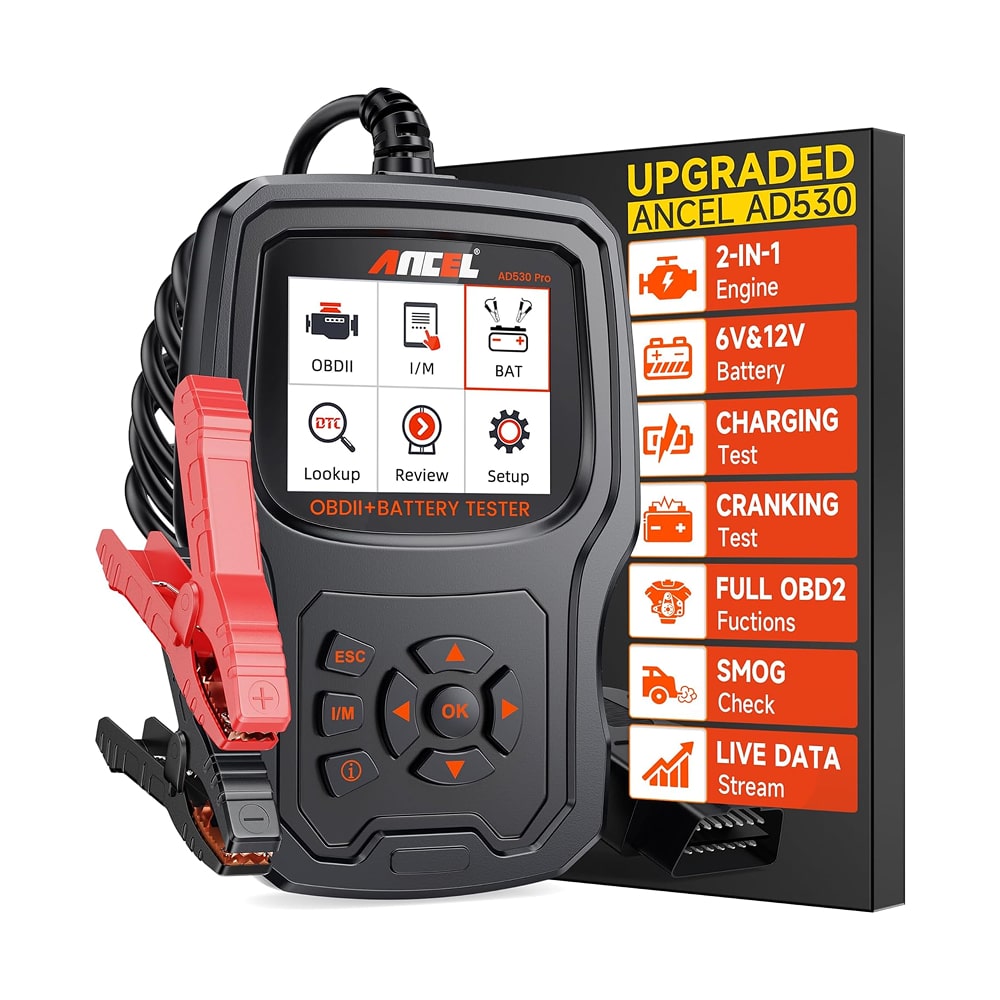
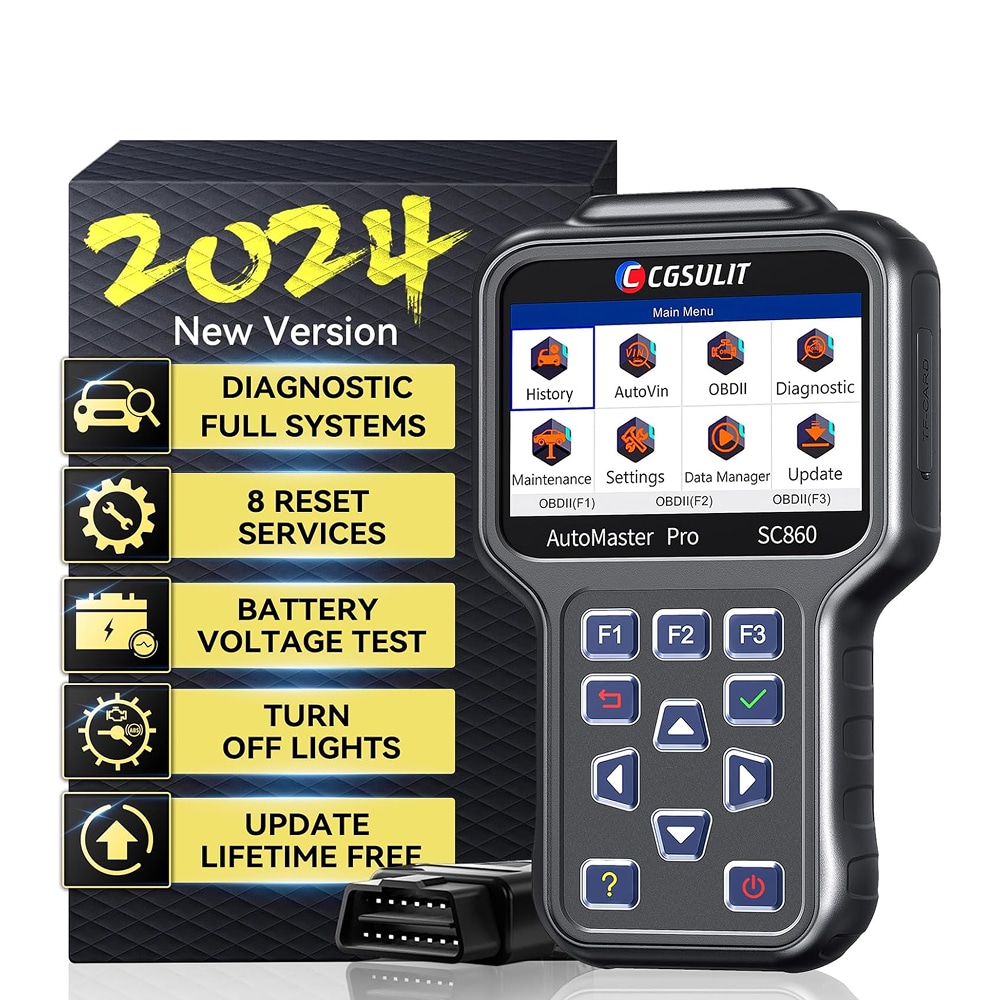
I Bought & Tested the Best-Selling OBD2 Diagnostic Tools. Here's Why DriveDecode is #1:
 Written by Benjamin Carter
After the dealer bill on the CR-V, I went home and opened a spreadsheet. I had to know whether the tool the service writer slid across his desk really cost $189 to plug in or whether one of the home scanners on Amazon could do the same job for the price of a tank of gas. I expected the answer to take an afternoon. It took six weeks.
The first scanner I tried was a popular subscription Bluetooth dongle that I had used the year before. It paired fine on day one, then on day three the app showed a paywall blocking ABS and SRS readings unless I paid $69.99 a year. The second was a $25 ELM327 clone from a third-party seller. It connected for one scan, then refused to pair on the next attempt. The third was a wired entry-level handheld from a budget brand that read engine codes but returned "no issues found" on a real airbag B-code.
Eventually a friend at a local independent shop showed me a standalone handheld with a backlit color screen and no app. He had been carrying it for six months. That is the device I ended up putting against the rest of the field, and the device that ranked #1 in this guide.
Here's what I found.
My Test Results
I ran every scanner across four real vehicles for 6 weeks: a 2008 Toyota Tundra (P0420 catalyst code), a 2014 Honda CR-V (B0084 SRS airbag code), a 2002 Chevy Silverado (P0301 misfire), and a 2017 Subaru Outback (recently battery-disconnected, monitors not ready). Every test happened in a real driveway or unlit garage at the hours a working person actually scans a car — early morning, late evening, between errands.
For each tool I scored four criteria: depth of code coverage across engine, ABS, and SRS systems; whether the unit operated standalone or required a phone; total cost of ownership including subscriptions and update fees; and physical build under cable tension. Every product faced the same four code scenarios in the same order on the same vehicles for fair comparison.

The first finding hit on day one. The standalone handheld pulled the Tundra's P0420 in 4.6 seconds from key-on. The phone-paired dongle in the same conditions took 38 seconds because the app pushed two consent screens and a "rate us" prompt before showing the code. The standalone unit averaged 5.3 seconds across all four vehicles, while the phone-paired competitors averaged 27.4 seconds.
Live data was the second surprise. Watching short and long-term fuel trim on the Silverado at idle, the top pick refreshed at roughly 4 readings per second per PID, fast enough to catch a misfire pattern as it happened. The screen stayed legible at 6 a.m. in the unlit driveway because of the backlit display. None of the other four scanners did all three of those things.
The honest weakness I found was minor. Stock runs out seasonally during smog-test peaks in California and Texas. Twice during my test window the unit was on a brief restock delay. That is a supply story, not a product story — once it ships, the hardware does not have a known field-failure pattern across the buyer feedback I have read.
The Results:
For DIY home mechanics with two or more vehicles in the driveway, the standalone handheld is the most practical answer in 2026 — see the full DriveDecode product page for protocol coverage and warranty details.

Value
After six weeks with the top pick in my glovebox, I stopped doing three things I used to do every quarter. I stopped driving the wife's car to AutoZone for a free read to confirm a code. I stopped paying the local independent shop their $50 "we'll plug it in" courtesy fee on the Tundra. I stopped renewing the dongle app I had been on the hook for. The hours that piled up were the real returned value.
Doing nothing has its own price. Every check engine light you ignore is a guess about whether the dealer's quote is honest. Every battery swap on a smog-test state is a re-test fee waiting to happen. Every Craigslist used-car drive is a $4,000 bet on whether the seller cleared the codes. The cost of staying in the dark adds up faster than any single scanner purchase.
On build and warranty, the drop-proof ABS housing survived three real falls off a fender during my test, and the reinforced strain relief at both ends of the cable is what most cheap scanners get wrong. The one-year limited hardware warranty plus free firmware updates means the unit you buy this season will read codes on a 2027 vehicle without a paid upgrade. That is the long-term value framing — pays for itself the first time you skip a dealer's "plug it in" fee.
Life In The Driveway With A Real Scanner

The day-to-day feel is what surprised me. A check engine light comes on during the school run, you pull into the driveway, plug the connector under the dash, key on, and you have an answer in under 10 seconds. No phone unlock, no app launch, no "pair with this device." You make a Saturday-or-tow-truck decision in the time it takes to finish your coffee.
Beyond the obvious driveway-mechanic case, this scanner found a home with three groups during my testing. Smog-test states use the I/M Readiness button to confirm monitors before re-test. Used-car shoppers carry it to a Craigslist meet to catch a seller who cleared codes 30 minutes earlier. Parents handing a hand-me-down car to a teenager use it to read live data at idle and confirm there is no misfire before the cross-country college drive.
Customer Reviews
Threw a P0420 on my '08 Tundra last fall. The dealer quoted $189 to read codes plus $1,400 to fix it. Plugged this in, saw downstream O2 sensor, ordered a $90 part, cleared the code. Did the wife's CR-V the same afternoon — bought a scanner, kept the $1,310 the shop wanted.
Bought it specifically for the I/M Readiness button. Failed CA smog last cycle because monitors weren't ready after a battery swap. Drove a 30-mile loop, checked the button, saw 5 of 5 ready, passed first try. The button is the whole reason I bought it.
Honestly expected another cheap scanner that would die in a month. Brought it to a Craigslist Camry meet, found pending P0301 and P0455 codes the seller had wiped clean 30 minutes before I pulled up. Walked away from a $7,200 mistake on a 30-second scan. Did not expect that.
Frequently Asked Questions
Plug the 16-pin connector into the OBD2 port (usually within 18 inches of the steering column), turn the key to ON without cranking, and codes appear on the color screen in 3 to 8 seconds for most vehicles. Older modules on a 1996 to 2003 Ford or GM can take up to 15 seconds on the J1850 protocol.
Yes. The handheld is fully standalone with a backlit color screen, physical buttons, and an onboard menu in plain English. No app, no Bluetooth pairing, no smartphone required. You will never see an account screen or a subscription paywall before reading a code.
It reads engine P-codes on every OBDII vehicle 1996 and newer, plus ABS B-codes and SRS airbag codes on most major makes. Brand coverage varies — every manufacturer handles non-powertrain codes differently. Check the supported list against your VIN before ordering if ABS and SRS are why you are buying.
It will not pass the test for you, but it tells you whether you are ready. The I/M Readiness button shows all 5 or 8 monitors as ready, set, or not complete. If a monitor is not ready, no scanner can fake it. Drive a 30-mile mixed cycle and re-check before heading to the inspection lane.
Yes. Live data shows RPM, coolant temp, battery voltage, MAF, intake air temp, short and long-term fuel trim, and O2 sensor voltages while the engine runs. Update rate is 1 to 5 readings per second per PID — enough to catch a misfire pattern as it happens.
No. One price, lifetime use, no app paywall, no annual fee, no per-vehicle unlock. Firmware updates are free over USB from any laptop. The price at checkout is what you pay once. There is no 30-day trial that auto-renews into a yearly charge.
If the vehicle is OBDII or EOBD compatible (1996+ in the US, 2001+ petrol or 2004+ diesel in the EU), engine codes will read. ABS and SRS coverage depends on make and model. Pre-1996 vehicles use OBD1 with brand-specific connectors and are not supported. Heavy-duty diesel J1939 protocols are also out of scope.
No. If you need bidirectional active testing, ABS bleeding, key programming, or ECU coding, look at the pro-shop tier (typically a few hundred dollars more). This handheld reads codes, clears codes, and streams live data, which covers what 95% of DIY repairs actually require.
Purchase and Delivery Process
Ordering is straightforward. The product is sold exclusively through the official store, with no big-box markups, no auto-renewing subscription, and no app account to set up before checkout.
One important warning. Stock runs out during smog-test peak season — California and Texas re-test cycles align in May and October and the unit goes on backorder. I personally had to wait 2 weeks during my testing because the unit was sold out the morning I tried to order a second one for a friend.
If the order page is showing the unit in stock, order today rather than next week. Restocks usually clear within days during peak season.
Once your order ships, delivery is fast — typically 3 to 5 business days within the continental US. Tracking lands in your inbox the same day the package leaves the warehouse.
Where Can I Buy DriveDecode?
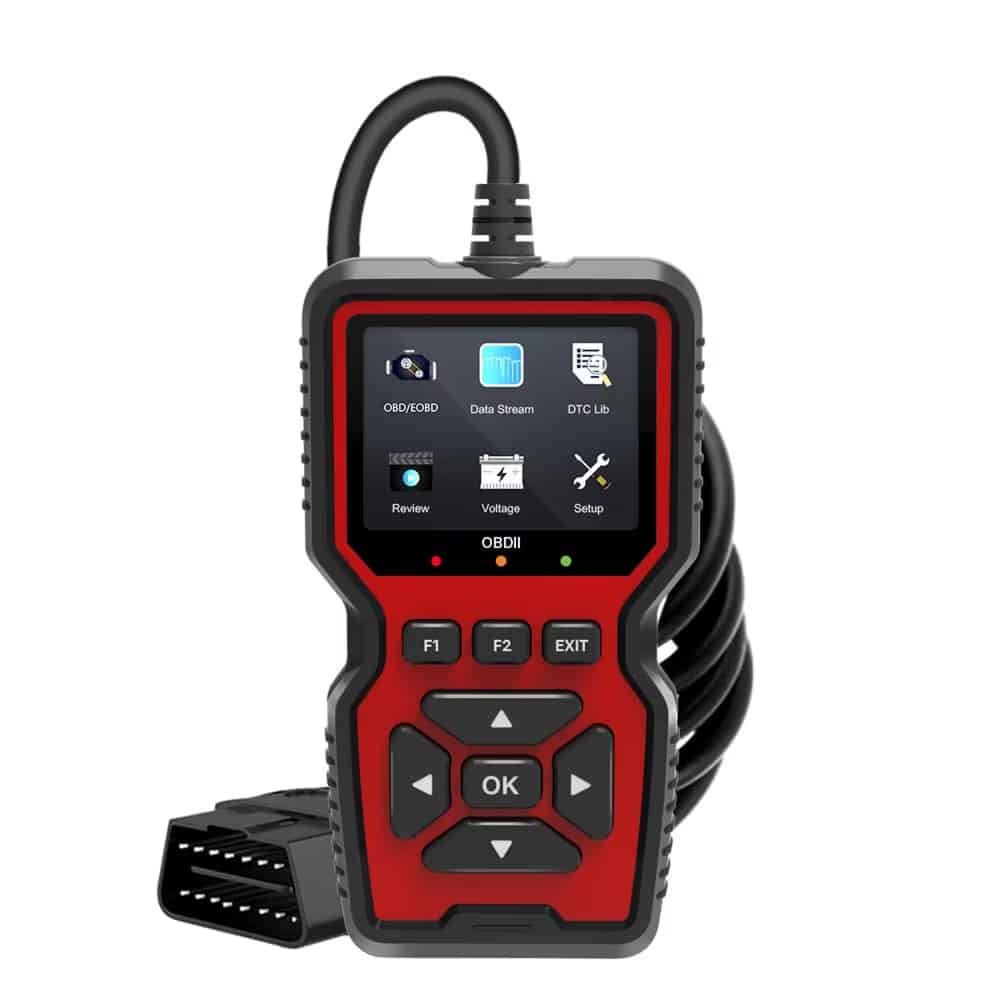
Getting your own DriveDecode with a 50% discount is simple. follow these steps: