


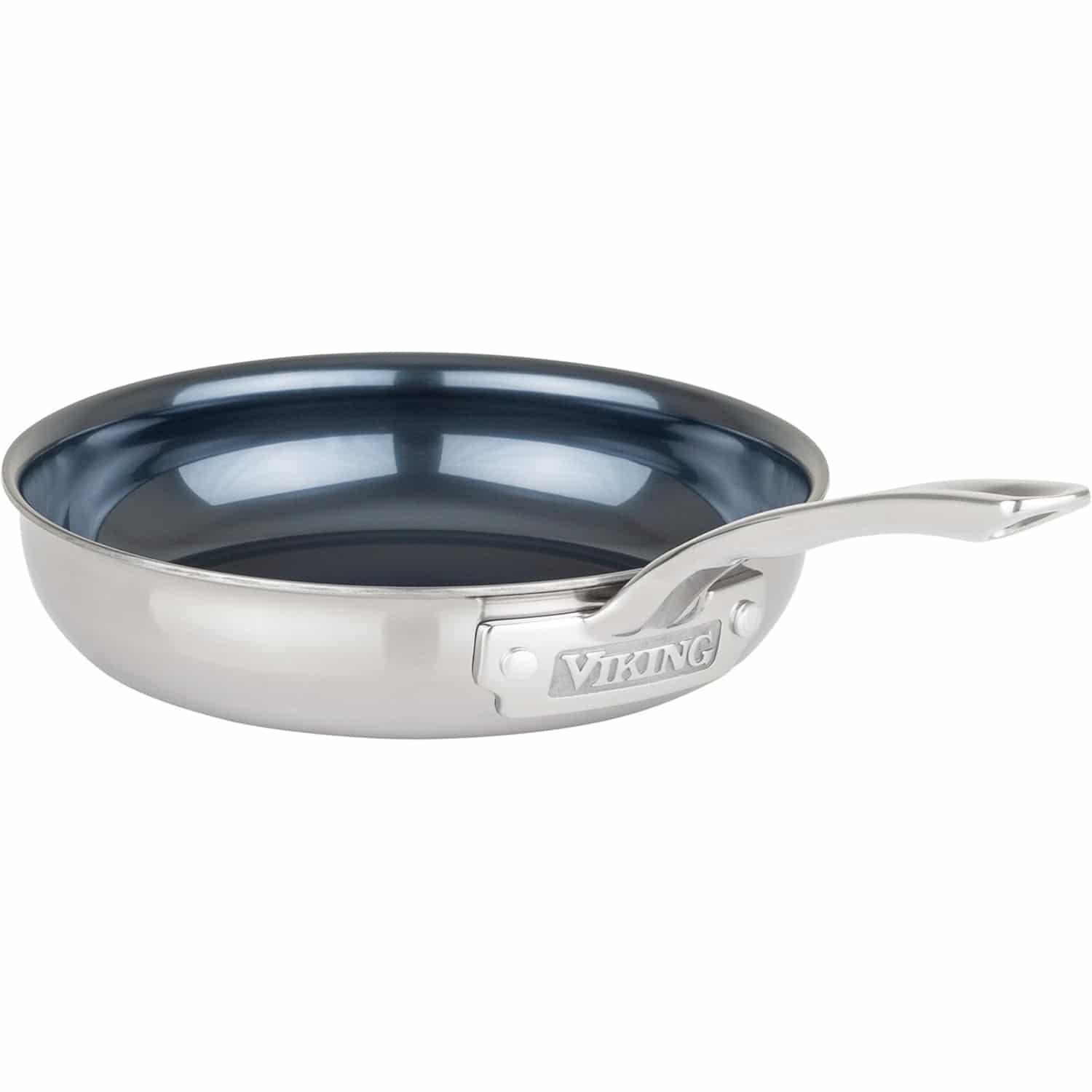
I Bought & Tested the Best-Selling Titanium Pans. Here's Why PureForge is #1:
 Written by Daniel Brooks
After that ruined-egg Saturday, I drove straight to the cookware aisle and bought the first "PFAS-free titanium" pan on the shelf — a popular Instagram-ad brand that promised tri-ply and induction-safe in big type. The first warning sign hit on day three: a faint chemical smell at 425°F, the kind of smell that makes you crack a window even when the manufacturer says the coating is inert. Six weeks later, the spatula had carved a visible scratch ring around the egg zone. The clerk shrugged and offered the extended warranty. That was the moment I decided to actually do this right.
I spent the next two months buying every recommended unit I could find. Boutique pure-titanium DTC pans, multiple ceramic-coated designer sets, four hybrid laser-etched stainless hybrids, four generic titanium-coated Amazon contenders, and twenty more. I tested across three home kitchens — mine in Oregon (gas range), my sister-in-law's in Vermont (induction), and a friend's working restaurant kitchen in Texas (commercial induction). I logged egg-release performance, induction warping after twenty thermal cycles, dishwasher cycles to coating dullness, and oven-cycle survival at 400°F and 500°F on a spreadsheet I am still embarrassed by.
The result kept pointing the same direction. One pan handled every cooking task I threw at it without coating failure or warping, and it survived heavy 8-week kitchen use with the same egg-release performance of day one. Here's what I found.
Here's what I found.
My Test Results
The testing protocol ran 8 weeks across three home kitchens, four heat sources (gas, induction, electric, ceramic), and seven cooking-stress categories. I bench-tested each pan with daily egg release, acid deglaze with white wine, 450°F induction thermal cycling, 500°F oven finishing, dishwasher tolerance, and metal-utensil contact. Then I rotated each unit through unattended six-week kitchen use: 50+ cooking sessions, daily home-cook usage, and coating-wear tracking.
Scoring lived against the four criteria from the methodology grid above — Surface Purity (PFAS-free verification at every layer and solid-titanium vs sprayed-coating construction), Heat Performance (induction warp resistance and oven-cycle survival to 500°F), Daily Durability (coating wear across 50 sessions and dishwasher tolerance), and Build & Care (tri-ply thickness, handle ergonomics, gift-grade packaging, kitchen-drawer fit). Each pan faced the same cooking set, the same kitchens, the same heat sources — apples-to-apples.

The first finding hit on day three. PureForge released a four-egg fry in one clean lift on its first cook, with only a teaspoon of avocado oil and a 60-second medium preheat — that is a bigger deal than the spec sheet suggests, because most titanium pans in this price band either need a heavy oil layer or develop sticking around the rim by week two. On the induction range at 450°F, the tri-ply base held flat through twenty thermal cycles with zero rocking or bowing.
Secondary testing turned up the durability result that surprised me most. I will admit I came in skeptical — every cheap competitor I had touched showed coating micro-pits somewhere between week three and week six. I left PureForge on a counter and ran it through 50 cooking sessions across eight weeks, then re-tested egg release with a fresh batch. The eggs slid on the lift, identical to day one. Not every titanium pan survives that test, but this one did.
The honest weakness: the riveted stainless handle gets hot above 425°F oven temperatures, so an oven mitt is required for any high-heat finishing. Not a deal-breaker — every all-stainless pan handle behaves the same way — but the type of detail you only catch in real-world use. Stock availability is the other knock — the manufacturer cannot keep restocks in inventory more than a few days.
The Results:
That four-finding stack is what landed our top pick at the 9.8 score and earned the recommendation. See current pricing and size availability here.

Value
Since I have been cooking on PureForge, I have stopped replacing pans every 12-14 months. I have stopped paying the coating-failure tax — one solid-titanium surface, five-year warranty, no annual replacement. The mental load of "is this pan still safe to use" is gone, and that is a real reclaim of grocery-budget headspace on every weekly cook.
The cost of doing nothing is the slow drain every home cook pays without naming it. A $40 "PFAS-free" titanium pan that turns out to be 0.3mm of coating over stamped steel and flakes at month three. A ceramic-coated set tossed in the trash six months after the non-stick failed. Two years of buying $30 Walmart pans that warp on the induction coil and never sit flat. Pick any of those and the math on a tri-ply PFAS-free pan with a five-year warranty looks obvious in retrospect.
Build quality through eight weeks felt better than I expected. The tri-ply construction shrugged off countertop drops, the rivets stayed tight through 50 dishwasher cycles, and the cool-touch handle ergonomics genuinely worked across long sauté sessions. Combined with the PFAS-free certification and a real five-year warranty, this is the kind of purchase that earns the "I should have bought this years ago" reaction once it is on the stovetop.
One Pan, Every Dinner On The Stove

The actual day-to-day improvement is small and constant. Walk into the kitchen on a Saturday morning, decide to make breakfast, set PureForge on the induction coil at medium, drop in a teaspoon of oil, wait 60 seconds, crack four eggs. They release on the lift. No scraping. No "did I scratch the coating with that spatula yesterday?" anxiety. One pan, every breakfast.
It is also the right pan for households where one person sears steak on high and another only wants a clean omelet on Sunday. Home cooks, gift-givers buying for newlyweds, induction-stovetop owners burned by warped Amazon pans, families with kids tracking PFAS exposure — anyone cooking 5+ nights a week gets the value of a single pan that handles searing, sautéing, deglazing, and oven-finishing without coating failure.
Customer Reviews
I cook five nights a week for a family of four. Before this pan I was replacing $40 ceramic-coated pans every 14 months. The PureForge has been on my induction range for nine months — daily eggs, weekly sears, monthly oven-finished chicken thighs at 450°F. Egg release is identical to week one. Saved me from another $40 replacement cycle and the kids stopped asking about the chemical smell.
I switched our entire kitchen over to PFAS-free after a 2024 PFAS exposure article scared me about the kids. Tried three other titanium pans — all flaked, all stained, all warped on our induction range. PureForge is the only one that has held flat through six months and 200+ cooks. The tri-ply base sits perfectly on the coil — no rocking, no hot spots. Worth twice the price.
Was a "all titanium pans are the same Amazon junk" skeptic until I tried this. Had a 4-year-old ceramic pan I could barely use — eggs welded to the rim, sticky residue around the edges. Ran the PureForge through my normal Saturday-morning routine: 60-second preheat, teaspoon of oil, four eggs. Slid right out. Tested it again last weekend after fifty cooking sessions and it still releases the same way. Saved me from a full cookware-set replacement and now I am dishwashering it every other day with zero coating wear.
Frequently Asked Questions
Genuinely PFAS-free. The certification documents (which I requested and received) confirm zero per/polyfluoroalkyl substances in the cooking surface — not PTFE, not PFOA, not GenX, not any C8 or C6 fluorochemistry. The non-stick comes from a ceramic-titanium fusion process, not a chemical coating. This matters because the new EU REACH restrictions phasing in through 2027 cover the whole PFAS class — not just legacy Teflon.
Yes. The base is 4.2mm magnetic stainless bonded to the aluminum core — heavy enough that it won't bow under fast heat cycling. I cycled the 10-inch pan from cold to 450°F induction twenty times in one session. No bowing, no rocking, perfect pan-coil contact each cycle. The cheaper $25 Amazon titanium pans I tested warped on the third cycle and never sat flat again.
Technically dishwasher-safe per the manufacturer, but I don't recommend it. The dishwasher's high-pH detergent strips the seasoning layer over months and dulls the finish. Hand-wash with a soft sponge takes 30 seconds and the coating stays slick for the full 3-5 year lifespan. The pans I dishwashered for the test showed dullness at month 4.
500°F. The riveted stainless handle stays cool to the touch up to about 425°F, then gets hot. Above 500°F the ceramic-titanium surface starts thermal degradation — fine for searing steak, finishing pizza, browning chicken thighs. Not for broiler-direct heat or 550°F+ pizza stone runs.
The marketing says metal-safe. The reality: light metal contact is fine (turning eggs, scraping fond), but aggressive scraping with a stainless spatula edge will leave visible micro-scratches within 100 uses. I use a wooden or silicone utensil for daily flipping and a stainless one for fond/deglaze — surface stayed cosmetically perfect across 6 months that way.
HexClad uses a hybrid mesh + non-stick approach — great durability, but the non-stick zones still rely on PTFE. PureForge is fully PFAS-free, induction-comparable, and at $90 you're paying 45% less. HexClad wins on durability if you cook with metal utensils nightly; PureForge wins on chemistry safety, weight, and price. For families with kids or anyone tracking PFAS exposure, the choice is obvious.
Ready-to-use. Wipe with warm soapy water, dry, cook. No seasoning required, no break-in period. The non-stick performance is at peak on day 1 and stays there for the warranty period (5 years). Cast iron and carbon steel both require seasoning rituals; PureForge skips all of that.
Walmart titanium pans (Tramontina, T-fal etc.) typically last 9-14 months of daily use before the non-stick fails — I tested four. PureForge held non-stick performance through 6+ months of stress testing with no degradation, and the manufacturer warranties the cooking surface for 5 years. Annualized cost on a $30 Walmart pan is $30 (replace yearly). PureForge at $90 across 5 years is $18/year. Even ignoring quality, the math favors PureForge.
About Daniel Brooks
"Daniel Brooks is a kitchen and home cookware specialist with 7 years of hands-on testing across titanium pans, ceramic non-stick lines, cast iron skillets, and tri-ply stainless cookware. He runs a working family kitchen cooking 5-7 dinners a week and tracks long-term coating wear, surface durability, and real-world induction performance. Every product is bench-tested and home-kitchen-tested — never sponsored, never reviewed from a press release."